APPLICATION / STORAGE & WAREHOUSE
More room for
what your business holds.
A used container can provide additional enclosed space. Match the actual unit to your goods, handling method and site conditions.
PLANNING YOUR CONTAINER
Start with what goes inside.
Business inventory, boxed stock, tools, equipment and industrial materials have different storage needs. List the largest item, the total volume, the way items will be retrieved and how often staff need access. A container used for temporary warehouse overflow should still leave safe space to move and inspect goods.
For business stock, consider packaging, shelving clearances and separation between incoming and outgoing goods. Shelving or racking is not included with a container body. Heavy or concentrated loads need a separate assessment of floor condition and support; container size is not a load-capacity guarantee.
PLANNING YOUR CONTAINER
Water, air and floor condition matter.
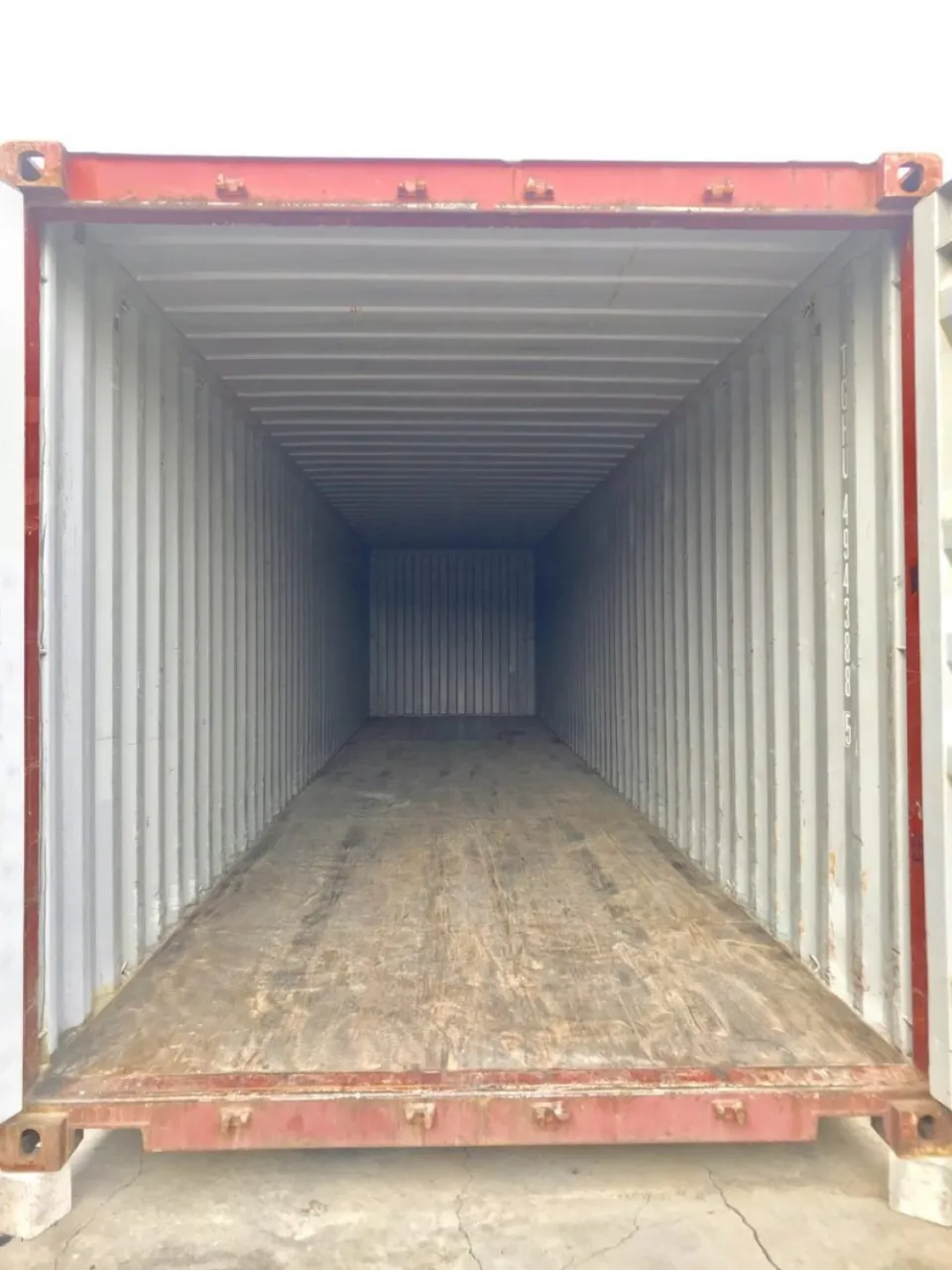
Check the roof, walls, door seals and floor for damage, visible gaps, staining, odours or signs of previous leaks. Ask about prior use and cleaning. Do not assume every used unit is suitable for food, pharmaceuticals, chemicals or other sensitive goods.
Steel containers can experience heat build-up and condensation. Rainwater resistance alone does not solve humidity or ventilation needs. Keep goods off damp surfaces where appropriate and seek suitable advice for moisture-sensitive stock. Ventilation changes, insulation or climate control are separate work and must be assessed before purchase.
PLANNING YOUR CONTAINER
Choose a layout that still works on day two.
A GP20 may suit a compact stock or tool store. GP40 provides more length for larger quantities; HC40 gives extra height, subject to the actual door opening. Consider whether goods at the back can be reached without unloading everything in front.
Confirm the door swing, access route, ground drainage and a suitable level support arrangement at the receiving site. Send the sales team the model, quantity, postcode, intended goods and handling requirements. Ask for current photos and the container, transportation and unloading costs as separate items.
LET’S FIND YOUR CONTAINER
A model. A location.
A clearer quotation.
Ask for current photos and a breakdown of all costs.